
Taking care of a pet involves a set of regular actions that address its physical health, hygiene, and emotional balance. The goal is not to accumulate products or appointments, but to understand the real needs of each species to adapt daily care.
Identification and I-CAD file: the often-overlooked administrative foundation
Before discussing brushing or kibble, a fundamental care step often goes unnoticed: identification by microchip or tattoo. The microchip or tattoo links to the national I-CAD file, which centralizes the owner’s contact information. Without this step, finding a lost animal becomes extremely difficult.
The point that many owners forget concerns updating information. After a move or a change of phone number, the details associated with the microchip must be updated with I-CAD. Identification with outdated information loses all practical usefulness.
As of January 1, 2024, the sale of dogs and cats in pet stores is prohibited in France. The buyer must also sign a commitment certificate at least seven days before welcoming the animal. This reflection period requires preparation for the arrival of the companion, including planning for care from the very first days.
To explore the care offered by Amazing Pet Place, this identification step serves as a good starting point before organizing the rest of the health protocol.
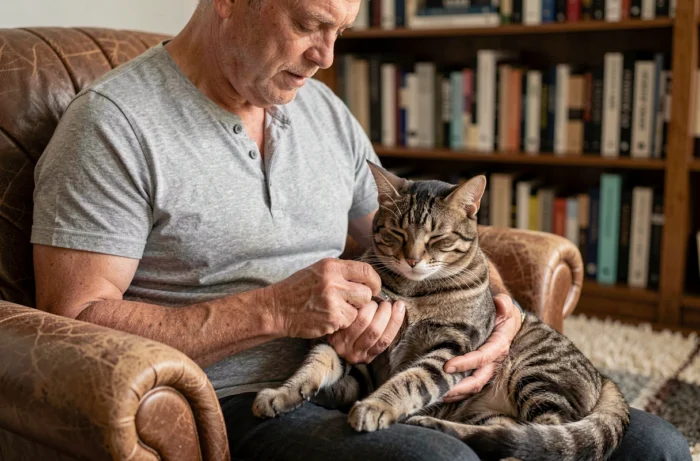
Ear, eye, and mouth care: what each area requires
The hygiene of a dog or cat is not limited to bathing. Three areas concentrate the majority of problems if neglected: the ears, eyes, and oral cavity.
Ears: frequency and method adapted to morphology
Dogs with floppy ears (cocker, basset) accumulate more moisture in the ear canal, which promotes ear infections. Cleaning with an appropriate ear product, applied according to the veterinarian’s recommendations, limits this risk. For cats, a simple regular visual check is sufficient in most cases.
Eyes: spotting signs of irritation
Clear eye discharge is normal in some flat-faced breeds. However, a greenish or yellowish discharge indicates an infection that requires veterinary advice. Cleaning the eyes with a compress and saline solution remains the basic gesture to master.
Oral hygiene: an underestimated care
Tartar gradually accumulates on the teeth of dogs and cats. In the long run, it causes gingivitis, pain, and sometimes infections that spread to other organs. Solutions exist: brushing with an appropriate brush, chew sticks for dogs, or scaling performed by the veterinarian when necessary.
Pet nutrition: adapting the ration to age and activity
Nutrition is the most direct lever on an animal’s health. An appropriate ration prevents obesity, diabetes, and joint disorders.
Dietary needs vary based on several criteria:
- The age of the animal: a growing puppy, an active adult, and a senior have different needs for protein, calcium, or fiber.
- The level of physical activity: a working dog or an outdoor cat burns many more calories than a sedentary animal.
- The health status: certain conditions (kidney failure, food allergies) require specific diets prescribed by the veterinarian.
- The breed: large dog breeds are more prone to stomach torsion, which influences meal frequency.
Monitoring your companion’s weight remains the simplest gesture to assess whether the ration is correct. An animal whose ribs cannot be felt under the fingers likely needs an adjustment.

Coat maintenance and parasite protection
Regular brushing of the coat serves two functions: removing dead hair and detecting potential parasites or skin lesions. The frequency depends on the type of hair. A long-haired cat requires almost daily brushing, while a short-haired dog can get by with a weekly session.
Parasite protection covers two distinct categories: external parasites (fleas, ticks) and internal parasites (digestive worms). Treatments are not interchangeable. An external parasite treatment in the form of a pipette or collar does not protect against intestinal worms, and vice versa.
The treatment schedule varies according to the season and the animal’s lifestyle. A cat that regularly goes outside in a garden requires more frequent deworming than a strictly indoor cat. The veterinarian remains the reference for establishing an appropriate protocol.
Veterinary follow-up and limits of animal telemedicine
Regular visits to the veterinarian allow for detecting problems before they become serious. The annual consultation serves as a check-up: weight verification, dental check, vaccine reminders, adjustment of parasite treatments.
Regarding online consultations, the situation in France needs clarification. The experimentation of veterinary telemedicine, regulated by the decree of May 5, 2020, ended on November 6, 2021, without extension. Making an appointment or consulting a file online does not constitute a remote medical act. A clinical examination in the presence of the animal remains the standard for making a reliable diagnosis.
For non-domestic animal species, the requirements are significantly more stringent. Depending on the species and the number of individuals kept, prior declaration or even a capacity certificate may be required. These obligations add to routine care and assume a thorough understanding of the specific needs of the species concerned.
A well-cared-for animal is one whose needs are understood before being addressed. The regularity of hygiene actions, a calibrated diet, and structured veterinary follow-up form a coherent whole, much more effective than sporadic interventions triggered by urgency.