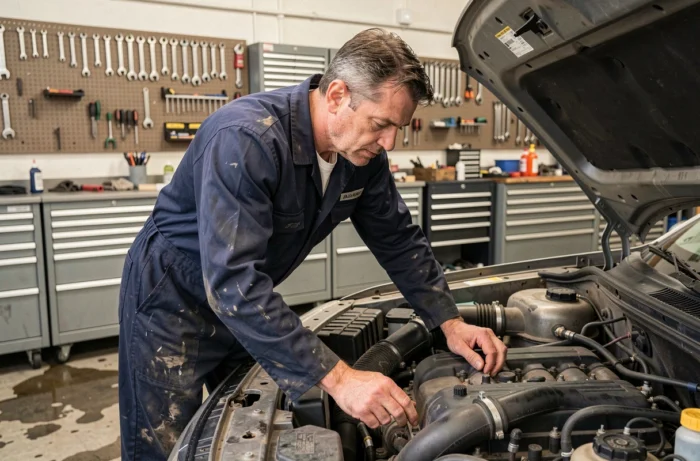
An engine warning light coming on on the motorway, a brake pedal going spongy on a downhill stretch, a flat tyre in an empty car park: most breakdowns could have been avoided with regular car maintenance. Keeping your car in good mechanical condition doesn’t require a mechanic’s expertise, just a methodical approach to a few key areas at the right intervals.
Manufacturer recalls and VINs: the check nobody does
Before even talking about oil changes or tyres, there’s one maintenance check that flies completely under the radar: finding out whether your vehicle is subject to a manufacturer recall. Franceinfo reports that car recall campaigns in France have increased significantly since 2016, with some involving serious risks (defective airbags, braking systems, electrical problems).
The catch: searching for your make and model on RappelConso isn’t enough to find out whether your specific vehicle is affected. You need to visit the manufacturer’s website and enter the vehicle’s VIN (engraved on the plate at the bottom of the windscreen on the driver’s side, or shown on the registration document). This is the only reliable method.
A change to the roadworthiness test that came into force in 2026 now includes certain serious recalls among the inspection checks. In other words, an unresolved recall could mean a retest. So it’s well worth checking this information before waiting for your next inspection date. Technical specifications and recall alerts are documented on auto-mechanic-info.com, making it possible to cross-check the information against the manufacturer’s data.
Engine oil and filters: a realistic car maintenance schedule
An oil change remains a basic car maintenance task. But the interval depends on the engine type and how the vehicle is actually used. A diesel car driven mainly in town will clog its oil and particulate filter much faster than a petrol car driven on the open road.
What the service book doesn’t always tell you
The manufacturer specifies a mileage or time interval between oil changes. In practice, frequent short trips wear out oil faster than long journeys. The oil doesn’t reach its proper operating temperature, condensation builds up in the sump, and the additives break down prematurely.
The oil filter should be replaced at every oil change, without exception. The air filter, on the other hand, can be checked visually: remove it and hold it up to the light. If it’s opaque, replace it. The cabin filter, which is often overlooked, affects ventilation and demisting—both essential to road safety.
Brake fluid: an underestimated maintenance item
Brake fluid is hygroscopic: it absorbs moisture from the air over time. This water lowers its boiling point. During prolonged braking on a downhill stretch, degraded fluid can create vapour bubbles in the system, making the pedal feel soft or even ineffective. Bleeding the brake fluid according to the manufacturer’s recommendations (generally every two years) helps prevent this risk, regardless of mileage.
Tyres and brakes: signs of wear you can spot yourself
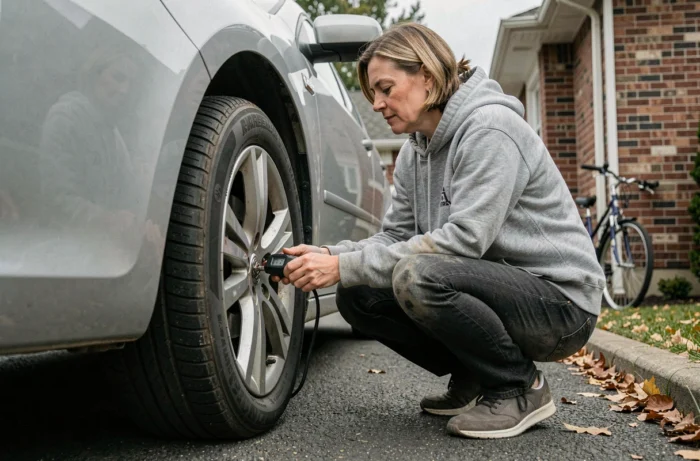
You don’t need a car lift to assess the condition of your tyres. Two checks are all it takes: tread depth and inflation pressure.
- Wear indicators are small raised bars moulded into the bottom of the tyre’s main grooves. When the tread reaches their level, the tyre is at the legal limit and must be replaced.
- Check tyre pressure when the tyres are cold, at least once a month. An underinflated tyre increases braking distance, overheats and wears unevenly along the edges.
- Overinflation, by contrast, reduces the contact area with the road and causes premature wear in the centre of the tread.
- Uneven wear (one side of the tyre being smoother than the other) indicates a wheel alignment problem or a worn shock absorber.
With brake pads, a metallic squeal when braking usually means the built-in wear indicator is rubbing against the disc. At this point, the brake pads should be replaced without delay. Some vehicles have a dedicated dashboard warning light that comes on before the pads reach this stage.
Reused parts and quotes: what French regulations allow
When a mechanical repair requires a replacement part, you don’t have to accept a new one every time. French regulations require repairers to offer consumers the option of parts from the circular economy (used, reconditioned or exchange parts) for certain categories of components.
In practice, this option doesn’t always appear on the quote automatically. You can ask for it explicitly and insist that it be included in writing. This is a good option for items such as lights, mirrors, body panels or certain mechanical components that are not critical to safety. For braking or steering components, the exceptions set out in the regulations naturally apply.
Use your roadworthiness test report as a maintenance tool
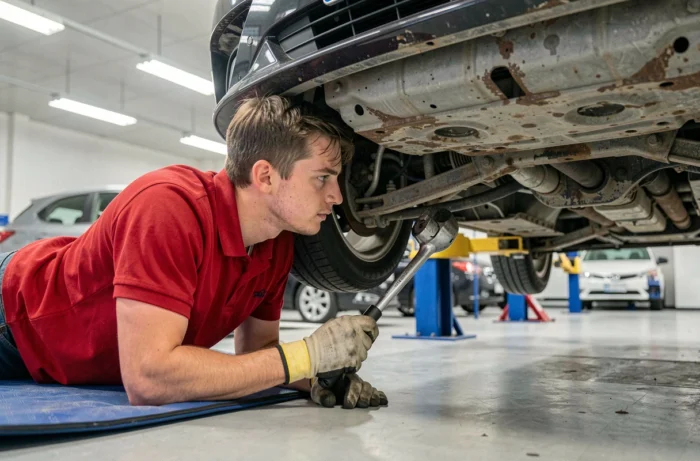
A roadworthiness test isn’t just about getting the sticker. Defects are classified by severity: minor, major and critical. Even a report that doesn’t require a retest may list several minor defects, such as play in a steering ball joint or a cracked CV boot.
Fixing minor defects before they become major is the very essence of preventive maintenance. Keeping successive reports also makes it possible to track how wear in a particular area changes from one inspection to the next.
Car battery: anticipate a breakdown rather than suffer one
A battery doesn’t always give warning before it fails, but a few signs can help you anticipate it. A slower start in the morning, headlights that dim when idling, or a stop-start system that frequently switches off are all signs of a weakening battery.
Conventional lead-acid batteries lose capacity through charge-discharge cycles and temperature fluctuations. A multimeter placed across the terminals (with the engine off) measures the resting voltage. Below a certain threshold, the battery won’t be able to start the car in cold weather. The test takes two minutes and can save you from being stranded in a car park one December morning.
Car maintenance depends more on regular checks than on complicated procedures. Checking your VIN for recalls, inspecting your tyres every month, bleeding the brake fluid at fixed intervals and asking for reused parts when appropriate: these practical habits protect your car’s mechanics, your safety and your wallet.