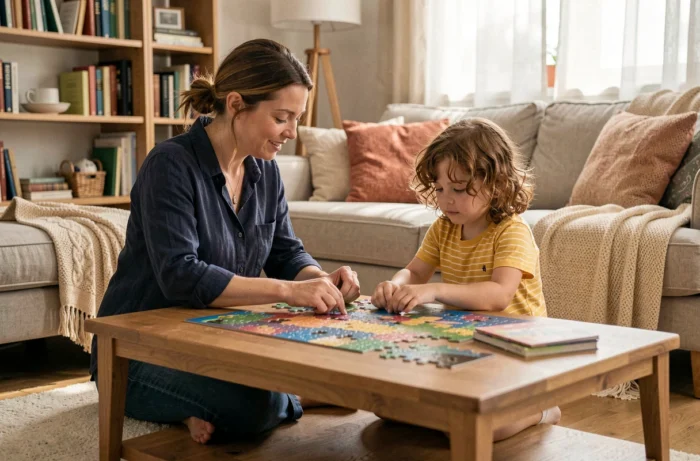
The deterioration in adolescents’ mental health documented by the EnCLASS survey between 2018 and 2022 is not simply a matter of individual distress. Santé publique France highlights differing trends by gender, with a more pronounced decline among girls. For parents, this changes the picture: supporting a child day to day means looking beyond the home to school, social dynamics and the inequalities that affect them.
Child distress linked to school and social contexts: noticing what parents may miss
A child who disengages, withdraws or gets into frequent conflicts is not always expressing a strictly family-related problem. Academic difficulties, bullying by peers, pressure to perform and economic inequalities within a class can all have a direct impact on mental health.
The usual parental instinct is to look for a cause at home (sleep, screens, diet). But this instinct has its limits. A child’s distress can stem from circumstances their parents cannot see: a difficult classroom atmosphere, a teacher struggling to cope or an exclusionary group dynamic.
We find that families who ask open-ended questions about their child’s experience at school (not just their grades) are more likely to spot early warning signs. Asking “What made you uncomfortable today?” tends to reveal more than “Did you have a good day?”.
When a child talks about an injustice they experienced at school, the temptation to downplay it (“That’s normal, it’ll pass”) shuts down the conversation. Acknowledging their feelings without making the situation seem worse, then checking whether the problem persists, is the most effective way to keep the dialogue open.
Children’s emotional development: moving beyond managing outbursts
Talking about emotional skills is not just about teaching a child to “manage their anger”. Emotional development involves being able to name, contextualise and communicate what we feel, including conflicting emotions.
Find parenting advice on Poupala covering these practical aspects of parenting, from early childhood through adolescence.
One point is often overlooked: children do not need their parents to be emotionally perfect. They need to see adults acknowledge their own mistakes. Saying “I overreacted earlier; that wasn’t fair” models exactly the skill we want to pass on.

Three practical approaches work better than a lecture about emotions:
- Describe your own feelings out loud (“I’m tired, and it’s making me impatient”) to normalise talking about emotions from an early age.
- Separate the emotion from the behaviour: accept the anger while setting a limit on the action. “You’re allowed to be furious, but you’re not allowed to hit” is a simple phrase whose formative effect is documented in developmental psychology.
- Revisit an intense emotional episode afterwards, once things have cooled down, to help the child piece together what happened: what took place, how they felt and what they could have done differently.
Screens and digital life: ask the right questions instead of setting the right rules
Conversations about screens too often focus solely on screen time. Limiting use to one hour a day or banning social media until a certain age sets boundaries, but it is not an educational strategy.
What a child does online matters more than how much time they spend there. A teenager who watches programming tutorials for two hours has a different relationship with screens from someone who passively scrolls through anxiety-inducing content.
The most productive approach is to enter a child’s digital world with curiosity, not control. Asking what they have seen, what they found funny or upsetting, which creator they follow and why opens up a space for dialogue that a ban alone cannot create.
This does not mean doing away with boundaries. But boundaries carry more weight when children feel that their parents understand what they are being asked to limit. A parent who has never watched a TikTok video with their child is missing an opportunity to connect.
Parenting and exhaustion: recognising your limits to offer better support
An exhausted parent is less able to pick up on their child’s signals, reacts more strongly to conflict and has fewer resources available for conversation.
Taking care of your own mental health is part of parenting, not a luxury. Identifying the sources of overload (mental load, isolation, financial difficulties) and seeking support before reaching breaking point can change family dynamics.
Some warning signs in parents deserve attention:
- Disproportionate and recurring irritability in response to everyday situations with the children.
- A persistent sense of being an inadequate parent despite constant effort and objectively reasonable outcomes.
- Emotional withdrawal: no longer wanting to play, listen or spend time with the child, beyond occasional tiredness.
These signs do not make someone a bad parent. They indicate that additional support (from a healthcare professional, loved ones or a support service) could help.
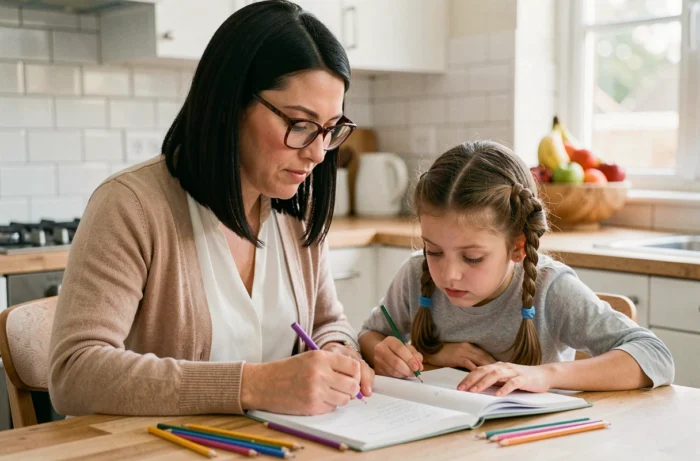
Supporting a child’s wellbeing does not come down to one method or a checklist of best practices. The EnCLASS survey reminds us that young people’s mental health is shaped outside the home, too. A parent’s role is less about controlling every factor and more about being available, attentive to early warning signs and able to ask for help when the situation becomes too much to handle.