
Asia is home to a diversity of cultures, landscapes, and artisanal heritage, making it an ideal destination for travelers seeking tangible souvenirs and memorable experiences. Each year, the continent attracts a growing share of global tourist flows, with destinations distinguished by their temples and rice paddies as much as by their local craft markets. Recent regulatory changes, particularly in Japan, are redefining the conditions for tax-free purchases and adding a logistical dimension to every trip.
New Tax-Free Rules in Japan: What Changes for Travel Souvenirs
Japan remains one of the most sought-after Asian destinations for souvenir shopping, from traditional ceramics to lacquerware, as well as regional teas and sweets. The tax reform that comes into effect on November 1, 2026 profoundly alters the way travelers shop tax-free.
The current system, where tax is simply deducted at the time of purchase, will disappear. From now on, travelers will pay tax at the checkout and then request a refund at customs before leaving the country. Items must be presented before baggage check-in, and any product consumed on-site loses its right to a refund.
Japanese customs will check purchases transaction by transaction. If an item linked to a receipt is missing during the passage, the other items from the same purchase may lose their refund eligibility. For multi-stop itineraries or gifts shared among travel companions, keeping each receipt with the corresponding products becomes a real logistical challenge.
Another point to anticipate: since March 31, 2025, a traveler can no longer ship their tax-free purchases abroad themselves. Only the store can offer this shipping service. For bulky souvenirs (pottery, heavy textiles), this requires checking the store’s shipping policy before purchasing. Those who wish to travel with En Route pour l’Asie will find tips for organizing an itinerary that takes these practical constraints into account.
Vietnam and Northern Rice Terraces: Landscapes That Stay in Memory
Vietnam is among the Asian destinations where the visual experience takes precedence over shopping. The terraced rice fields in the north, in the Ha Giang region or around Sapa, offer panoramas whose beauty lies in their vibrant character: colors change with the season, the stage of cultivation, and altitude.
What distinguishes these landscapes from postcard clichés is access. Reaching the remote villages of ethnic minorities often involves winding roads and rudimentary transport conditions. The memory is built in the effort of the journey and in encounters with local communities, whose textile craftsmanship (embroidery, batiks) provides a direct source of income.
What Travelers Underestimate in Vietnam
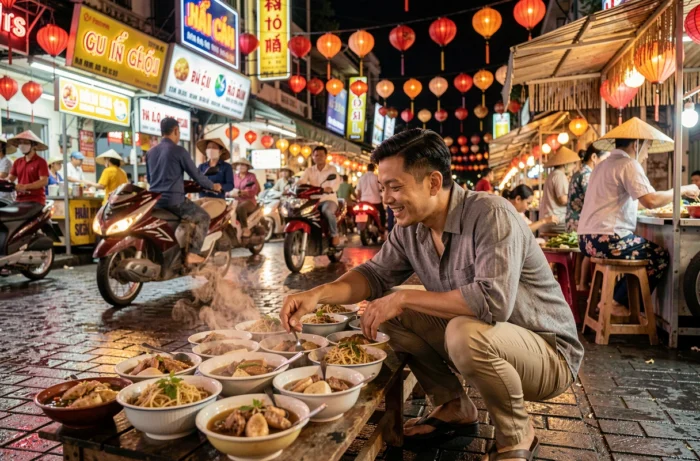
Southern cities like Ho Chi Minh City offer a completely different experience. The Ben Thanh market remains a lively negotiation spot for lacquerware, coffee, or custom clothing. The price gap between rural north and urban south can be considerable for the same type of artisanal item.
The question of authenticity also arises: in highly touristic areas, some crafts sold as local actually come from industrial production. Identifying an item genuinely made by village artisans requires a minimum knowledge of regional techniques.
Temples and Islands of Southeast Asia: Thailand, Cambodia, Indonesia
These three countries share a common point: the density of heritage sites accessible to various budgets. The temples of Angkor in Cambodia, those of Chiang Mai in Thailand, or the complexes of Borobudur and Prambanan in Indonesia produce souvenirs of a different nature, more contemplative.
- Thailand combines southern beaches (Krabi, Phi Phi Islands) and northern religious heritage, with night markets where local crafts (silk, wood sculpture) remain affordable.
- Cambodia concentrates its appeal around the Siem Reap region, but coastal provinces like Kep or Kampot are gaining interest for travelers looking to venture off the beaten path.
- Indonesia, beyond Bali, offers islands like Flores or Sulawesi where ikat textile craftsmanship continues to be produced using ancestral methods, with patterns unique to each community.

A common pitfall in this area concerns religious objects. Buying a Buddha statue as a decorative souvenir can pose problems at customs in some countries (Thailand regulates the export of representations of Buddha beyond a certain size). Checking local legislation before purchasing avoids complications at departure.
India: Souvenirs of Craftsmanship and Scale Shock
India is unlike any other Asian destination in terms of artisanal diversity. Each region produces distinct crafts: textiles from Rajasthan, spices from Kerala, miniatures from Madhya Pradesh. The challenge for travelers is not finding souvenirs, but choosing.
Indian markets operate according to negotiation codes that can bewilder visitors accustomed to fixed prices. The first price announced can be several times higher than the actual price. This practice is not dishonest in the local context, but it requires time and a certain comfort with bargaining.
The Logistical Weight of Indian Souvenirs
Brass items, carpets, or carved furniture pose a concrete transportation problem. Unlike Japan, where stores often offer careful packaging and sometimes shipping, international shipping from India remains unpredictable in terms of timing and tracking. Experienced travelers prefer lightweight souvenirs (pashmina shawls, packaged spices, silver jewelry) to avoid unpleasant surprises upon return.
Asia is not just a checklist of countries to tick off. The most lasting travel souvenirs often arise from a poorly anticipated practical detail, an unexpected encounter, or an item purchased in a workshop away from the marked routes. The Japanese tax-free reform reminds us that even the administrative aspects of a trip shape the final experience.