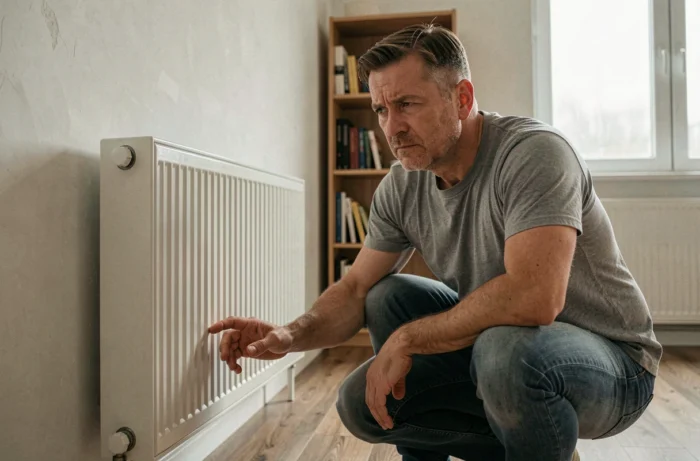
An unusual smell coming from a radiator when the heating is switched back on is often a cause for concern. The type of smell, how long it lasts and where it is coming from in the home can point to very different causes, some of which require a prompt response. Distinguishing simple carbonised dust from an electrical fault or a problem with the gas supply can completely change what you need to do.
Radiator smells: causes by appliance type
Electric radiators and hot-water radiators do not produce the same smells, or for the same reasons. The table below summarises the most common situations, based on information documented by manufacturers and heating professionals.
| Radiator type | Smell | Likely cause | Risk level |
|---|---|---|---|
| Electric (new) | Hot plastic, varnish | Manufacturing resins releasing fumes during the first heating cycle | Low (disappears within a few hours) |
| Electric (old) | Burning dust | Dust accumulated on the heating elements, carbonising when switched on | Low if the smell stops after cleaning |
| Electric (old) | Persistent melted-plastic smell | Abnormal overheating of a component, or a damaged cable or connector | High (electrical hazard) |
| Hot water (system) | Rotten eggs (sulphur) | Hydrogen sulphide produced by anaerobic bacteria in stagnant water | Medium (gas is toxic at high concentrations) |
| Hot water (system) | Diffuse chemical smell | Corrosion inhibitor or antifreeze in the system | Varies depending on the product |
This table can help you make an initial diagnosis. If the smell matches the “abnormal overheating” row, switch off the appliance immediately. To better understand the toxic smell from a radiator, according to Aireo Chauffage, the most reliable way to tell the difference is to distinguish carbonised dust from melted plastic.

Smells in several rooms or homes: faulty appliance, ventilation or gas leak
When the smell is confined to one room and one appliance, the likely source is clear: the radiator itself. The situation is more complicated when the smell spreads to several rooms, or even to several homes in the same building.
Localised faulty radiator
An electric appliance with overheating wiring, or with an object that has fallen inside it, produces a smell concentrated right next to the unit. The intensity drops noticeably a few metres away. To test this, switch off the suspected appliance and ventilate the room: if the smell disappears within minutes, the source is confirmed.
Shared ventilation problem
In an apartment building, a faulty mechanical ventilation system or a blocked duct can carry smells from one home to another through shared ventilation shafts. The smell then appears in several apartments even though no local radiator is responsible. The telltale sign: the smell persists even when the radiators are off. In this case, the building manager or property management company should arrange an inspection of the ventilation system.
Gas leak: a separate case
Natural gas supplied in France is scented with mercaptan, which has a distinctive sulphurous smell. If several residents notice a sulphur smell at the same time and it is unrelated to their radiators, the priority is to evacuate and call the gas emergency number from outside. Do not operate any electrical equipment (switches or sockets) inside the home.
One point that is often overlooked: carbon monoxide is completely odourless. A suspicious smell can neither confirm nor rule out its presence. If several people experience headaches, nausea or unusual fatigue in a home with a fuel-burning appliance, leave the property and call the emergency services, even if there is no smell.
What to do immediately if you notice a suspicious heating smell
The right response depends directly on the type of smell. The steps below are listed in descending order of priority.
- Switch off the appliance at the circuit breaker (not just at the thermostat) if the smell suggests melted plastic or abnormal overheating. Do not reconnect it until it has been inspected by a professional.
- Ventilate immediately by opening the windows wide, even in cold weather, to refresh the air and reduce the concentration of particles or irritating gases.
- Evacuate the home if the sulphur smell is strong, affects several homes, or if residents develop physical symptoms (dizziness, nausea). Call the emergency services from outside.
- Visually inspect the inside of the electric radiator (grille, fins) for a trapped object, fabric or an unusual build-up of dust. Only do this when the appliance is switched off and cool.
If the smell is caused by dust burning off when the heating is first switched on for the season, it usually disappears on its own after a few hours of operation and good ventilation. A smell that persists for more than 24 hours after cleaning indicates a more serious problem.
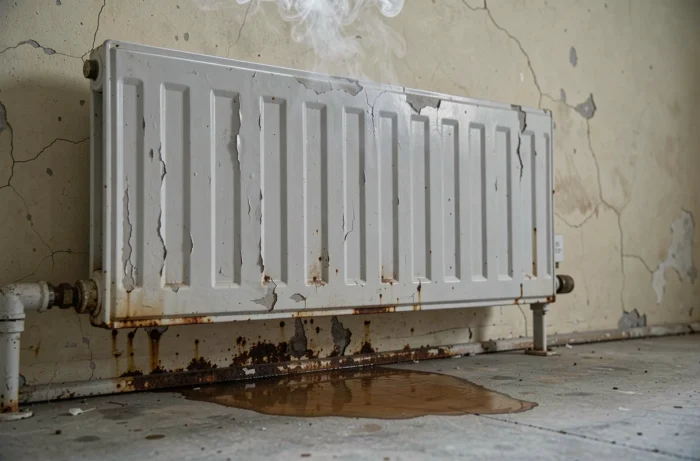
Radiator maintenance and preventing toxic smells
Most unpleasant smells when the heating is switched back on are caused by a lack of maintenance during the period when it is not in use. A few targeted steps can significantly reduce the risk.
For an electric radiator, dusting the fins and grille before each heating season is enough to remove the most common cause. A vacuum cleaner with a narrow attachment, followed by a damp cloth, removes most of the build-up. Never use a flammable aerosol product near a heating element.
For a hot-water system, bleeding the radiators once a year releases air and some of the organic deposits that encourage bacterial growth. If the water released has a sulphur smell, the system needs to be treated (power-flushed). A heating engineer can check the water condition, system pressure and whether there is any internal corrosion.
The area around the radiator matters too. Furniture pushed up against the unit, a curtain brushing against the grille or an object slipped between the fins by a child can all cause smells and, in the case of an electric convector heater, even start a fire.
Distinguishing a temporary nuisance from a warning sign comes down to three factors: the type of smell, how long it lasts and how widely it spreads through the home. A dust smell that fades within a few hours only requires cleaning. A melted-plastic smell, a smell spreading to several rooms or physical symptoms among residents require the appliance to be switched off immediately and professionals to be called.