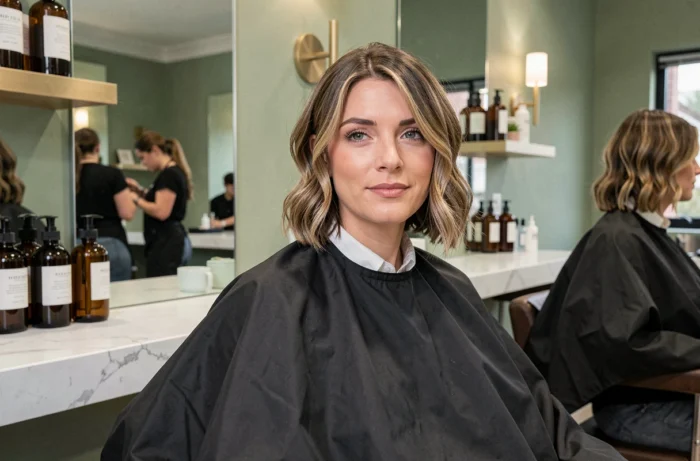
When you leave the salon with a haircut that takes twenty minutes of blow-drying every morning, the trend quickly loses its appeal. The 2026 hairstyle trends take that very constraint into account, offering cuts and colors that work for everyday life without an arsenal of products or a mandatory salon visit every three weeks. Here’s a look at the trends that are making a real difference this year.
Less maintenance: the factor shaping haircuts in 2026
Before choosing a haircut from a mood board, it’s worth asking a practical question: how much time will there be between salon appointments? Most of the 2026 hair trends share a common thread: reducing the need for touch-ups without sacrificing style.
Hair color is a good example of this shift. Blended roots, “lived-in” blondes, and dimensional brunettes make it possible to go longer between salon visits because regrowth blends in with the rest of the hair. If you’re aiming for platinum blonde or full gray coverage, appointments will still need to be more frequent, but the overall trend favors blended color over uniform, all-over shades.
The same logic applies to haircuts. A soft layered cut or textured bob holds its shape for several weeks, while an ultra-precise, graphic cut loses its appeal as soon as the hair grows out by a centimeter. Secret de Beauté’s 2026 hair trends follow the same direction: lines designed to work with your hair, not against it.
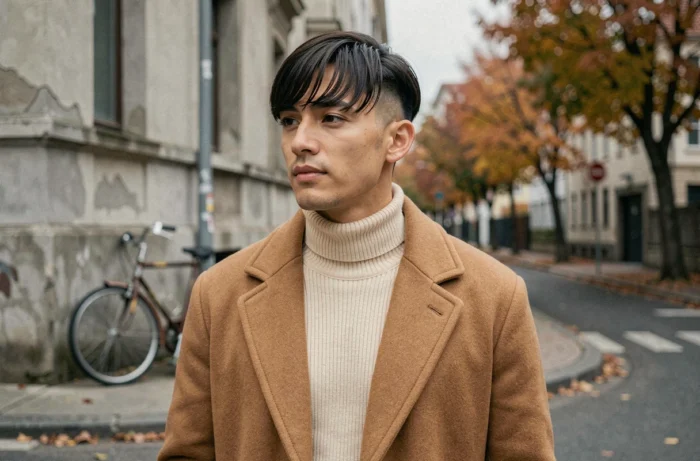
Textured bob or sculpted bob: choose based on your jawline and styling routine
Bobs and blunt cuts are still everywhere, but their 2026 variations are different enough to be worth a closer look. The textured bob is all about movement: the ends are slightly tousled, with volume concentrated around the cheekbones. It suits longer faces because it visually widens the middle of the face.
The sculpted bob has a very different feel. Its lines are clean, often cut at jaw level, for a deliberately graphic look. On a round face, this angular contrast helps define the contours. The trade-off is that it needs more regular styling to maintain its shape.
Curtain bangs or face-framing layers
Adding curtain bangs to a bob or blunt cut makes a difference in two ways: they soften a broad forehead and frame the eyes, drawing attention to them. Longer face-framing layers create a similar effect with less upkeep, since they blend into the rest of the hair as they grow out.
The choice between the two mostly depends on your natural texture. On fine, straight hair, curtain bangs hold their shape better without product. On thick or wavy hair, face-framing layers help avoid a heavy, curtain-like effect that can overwhelm the face.
Textured hair in 2026: cuts designed for curls and coils
Curly, coily, and kinky hair has become a recognized area of specialization among professionals. Bpifrance Création specifically identifies textured hair as a growing segment, and the MCB Paris 2026 trade show devoted a significant part of its demonstrations to these hair types.
In practice, this means cuts designed to work with the natural spring of curls rather than create a straightened look. Long layers, for example, remove weight without disrupting the curl pattern. Cutting hair dry, in its naturally dried state, lets the stylist see how it really falls and adjust each section accordingly.
- For loose curls (pronounced waves), a layered lob keeps the length while adding lift at the roots.
- For tight curls, a rounded “shape cut” defines the silhouette without thinning out the edges.
- For coily hair, the “big chop” is still an option, but gradual cuts with varied lengths offer a less dramatic transition.
The goal is no longer to adapt a cut designed for straight hair: the cut starts with the hair’s natural texture, which also reduces styling time.
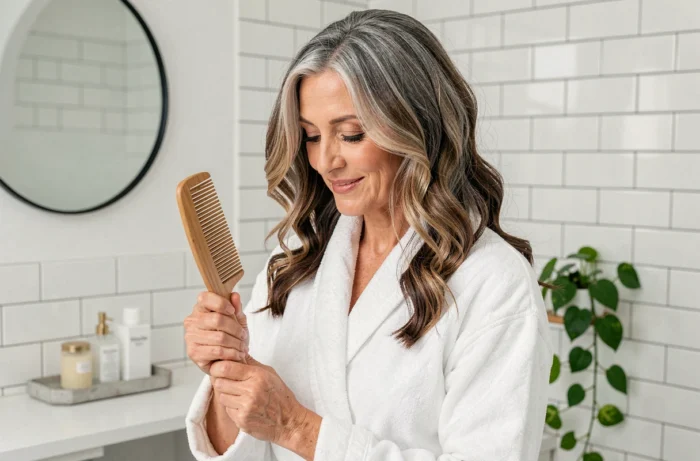
Hair health and salon treatments: the look starts at the scalp
Hair spa services and repair treatments are becoming an increasingly important part of salon offerings. This isn’t just a marketing gimmick: porous hair or an unbalanced scalp can undermine any trendy haircut. Shine, movement, and hold all depend directly on the condition of the hair fiber.
In practical terms, a hair and scalp assessment before a haircut helps shape the final result. A stylist who evaluates porosity, thickness, and scalp condition can adapt the cutting technique and recommend a targeted treatment. This move toward more premium services, documented by Bpifrance Création, reflects demand that now goes beyond visible style alone.
Color and care: two decisions that go hand in hand
Choosing a hair color without considering the condition of your hair often leads to a dull result after just a few weeks. Blended color (softened roots, dimensional highlights) has a technical advantage: it puts less stress on the hair fiber along the full length, helping preserve natural shine for longer.
For hair already weakened by repeated bleaching, a strengthening treatment before any new color is key to how well the pigment holds and how the finished look turns out. It’s not an optional step—it’s what makes the difference between a luminous result and straw-like hair after three washes.
The 2026 hairstyles all point to the same principle: the best style is the one that takes the least effort to maintain. Whether you choose a textured bob, a sharp blunt cut, or layered lengths for curly hair, it’s worth choosing a cut that works with your natural texture and a realistic maintenance schedule. The most current look this year is one you can recreate on a rushed Tuesday morning.