In France, the proportion of the population aged over 60 continues to grow, and prevention policies are adapting accordingly. Since 2024, schemes such as MaPrimeAdapt’ have helped fund home adaptations, while the “Mon Bilan Prévention” health check offers people aged 60–65 a dedicated consultation, fully covered by Assurance Maladie.
Ageing well after 60 is about more than following a list of healthy habits: it also means taking administrative and medical steps early, before a loss of independence limits your options.
Adapt your home before your first fall: prevention that too often comes too late
Most falls among older adults happen at home. The usual response is to adapt the home after an accident, under pressure to act quickly. Work is then arranged in a rush, with long waits for tradespeople and added stress that can make recovery more difficult.
Planning these adaptations in advance can make all the difference. An accessible bathroom (a level-access shower and grab bars), better lighting in hallways and the removal of door thresholds are not major renovations, but they can have an immediate impact on everyday safety.
Created in 2024, MaPrimeAdapt’ helps fund these home adaptations, subject to eligibility requirements. Criteria include the applicant’s age, income and circumstances. The grant can cover bathroom adaptations and improvements to indoor accessibility.
Checking your eligibility with the relevant services before an urgent need arises makes it possible to plan the work calmly and at your own pace. Resources such as the Cap San website for seniors bring together useful information to help you consider how to remain at home and choose prevention measures suited to your circumstances.
Mon Bilan Prévention at 60: what this medical appointment really covers
The “Mon Bilan Prévention” scheme is specifically for people aged 60 to 65. Fully covered by Assurance Maladie, this appointment is about much more than a simple blood test.
During a single consultation, the healthcare professional discusses several areas:
- Lifestyle habits (physical activity, diet, alcohol and tobacco use), with personalised rather than generic recommendations
- Vaccination status, often overlooked after 60 even though recommendations are regularly updated
- Screening suited to the person’s age and medical history, to identify risk factors before symptoms appear
- Balance and mobility, helping to identify a risk of falling before a fall occurs
This health check is a gateway to coordinated follow-up, not a one-off appointment. It can lead to practical next steps, such as a prescription for physiotherapy sessions, updated vaccinations or a recommendation to adapt the home. Booking this appointment between 60 and 65 means taking action while you still have the physical capacity to make lasting changes.
Vaccinations after 65: recent recommendations that are still not widely known
Vaccination recommendations for older adults changed in 2025, but the update often goes unnoticed. Pneumococcal and shingles vaccines are now recommended for people aged 65 and over. Vaccination against RSV (respiratory syncytial virus) is recommended from age 75, and from age 65 for people with chronic heart or respiratory conditions.
These vaccines do not replace the annual flu shot; they are given in addition to it. The main issue is not so much vaccine refusal as a lack of information: many older adults do not know these vaccines are available or confuse them with vaccines they have already received.
Checking your vaccination status during a Mon Bilan Prévention or a routine appointment can help you avoid learning about these recommendations only after being hospitalised with a respiratory infection. The vaccination schedule changes over time, and actively keeping up with these updates is an essential part of prevention after 60.
Physical activity and nutrition after 60: how your needs really change
Regular physical activity remains the best-documented way to preserve independence. The important distinction is the type of exercise: after 60, balance training and muscle strengthening matter just as much as endurance. A daily walk alone is not enough to prevent sarcopenia (age-related loss of muscle mass), one of the leading risk factors for falls and loss of independence.
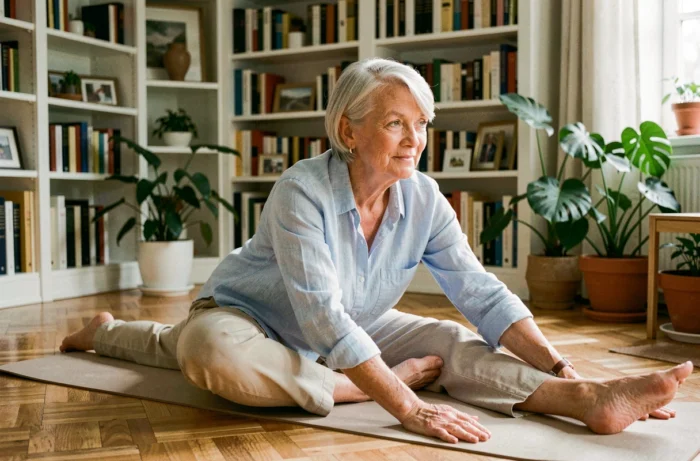
Targeted exercises—standing up from a chair without using your hands, walking heel-to-toe or balancing on one foot—for a few minutes each day help maintain postural reflexes. These simple movements require neither equipment nor a gym membership.
Nutrition: protein, a commonly overlooked need
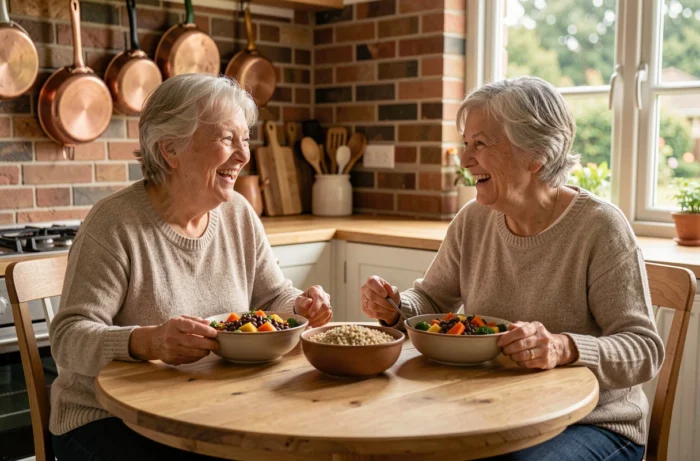
Protein requirements increase with age, while appetite often declines. Cutting portion sizes without adjusting the balance of meals can speed up muscle loss. Every meal should include a source of protein (meat, fish, eggs, legumes or dairy products).
Hydration is another critical issue: the sensation of thirst diminishes with age, increasing the risk of dehydration, especially in summer. Drinking regularly rather than waiting until you feel thirsty is a habit worth building deliberately.
Social connection and cognitive health: a protective factor often underestimated by medicine
Social isolation is associated with faster cognitive decline and a higher risk of depression among older adults. Maintaining regular social contact (through clubs, group activities or volunteering) is not just a nice-to-have: it is a measurable protective factor for health.
Activities that combine mental stimulation and social connection (memory workshops, group classes and community gardens) offer a double benefit. Keeping a structured routine, with regular appointments outside the home, can also help preserve your sense of time and place.
Protecting your health and independence after 60 depends on decisions made while you still have a choice. Adapting your home before an accident, completing your Mon Bilan Prévention between 60 and 65, updating your vaccinations, adjusting your diet and maintaining social connections: each of these steps is more effective when taken before difficulties arise, rather than in response to them.