When arriving in Lorraine from the south, over the Vosges ridges, the first instinct is often to head straight for Metz or Nancy. Both cities are well worth a visit, but the region stretching between them, around them and far beyond their urban centres tells a quieter story.
Exploring Lorraine differently means slowing down, following a towpath instead of a motorway, and stopping in a village where the heritage comes without an explanatory sign.
Dieuze salt: Lorraine heritage to taste and explore
People often visit Lorraine for its cathedrals or the lakes of the Vosges. Dieuze, in the Saulnois area, offers a different thread to follow: salt. The village built its identity around the extraction of white gold, an industry that lasted for centuries and whose most visible legacy is the Royal Saltworks.
Salt’s influence extends beyond the buildings. It can be found in local dishes, from pâté lorrain to artisan cured meats. Every year, the Dieuze Christmas market brings this heritage to the fore with products rooted in the tradition. It’s a way to connect industrial heritage, gastronomy and local life without following the usual tourist routes.
For anyone who enjoys planning a trip around a craft or a local food culture, the same approach works elsewhere in Europe. For example, serbia-unpacked.com offers themed itineraries in Serbia built around local produce and traditional crafts.
Remarkable meadows in the Lorraine Regional Natural Park: walking in a protected area
The Lorraine Regional Natural Park covers two areas with very different landscapes. To the east are ponds and wetlands; to the west, limestone plateaus dotted with dry grasslands. This mosaic of habitats means that some trails pass through areas with seasonal access restrictions.
Since 2024, agri-environmental and climate measures have specifically targeted the park’s remarkable meadows. Managed by the DRAAF Grand Est, these schemes regulate farming practices to protect fragile habitats. The meadows are still mown and grazed, but according to schedules and at intensities designed to protect their flora and fauna.
The Marsh Fritillary in the Moselle Vosges
The Marsh Fritillary is a good example of conservation in practice. This butterfly depends on wet meadows being left unmown until a specific date so it can complete its life cycle. In the Moselle Vosges, the DRAAF records the measures taken to preserve its habitat. For hikers, the impact is tangible: sometimes observing takes the place of walking freely through an area, and some sections require visitors to stay on the marked trail.
Rather than detracting from the walk, this restriction sharpens your eye. You might spot wild orchids along the path, birds of prey at the woodland edge, or dragonflies hovering above temporary ponds. The park also runs guided outings with naturalists who know where to find each species.
Living traditions in Lorraine: Saint Nicholas and fine crafts
In early December, the Saint Nicholas festival remains an important cultural fixture in Lorraine. Parades, floats and the character of Père Fouettard: this folklore is passed down from one generation to the next, particularly in Nancy and the towns of Moselle and Meuse.
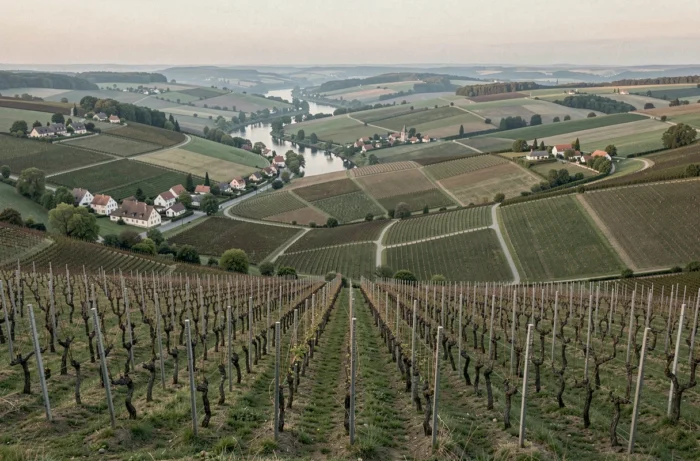
What sets Lorraine’s Saint Nicholas celebrations apart from a typical Christmas market is the prominence of fine crafts. You’ll meet artisans whose work carries on a long history. These crafts are not historical re-enactments but real economic activities, with workshops open year-round in villages such as Baccarat, Lunéville and Sarreguemines.
Faience, crystal and glass: a workshop trail
You can plan a two- to three-day route linking workshops that are still in production. The idea is to follow the Meurthe and Moselle rivers, stopping in towns where these skills have left their mark—in market halls, factories and workers’ housing—and where production continues today.
- The crystal works in the Meurthe Valley, heirs to a glassmaking tradition born of the area’s forests (fuel) and silica sand (raw material), open their workshops to demonstrate crystal blowing and cutting.
- Faience in the Saulnois area and around Sarreguemines can be explored through technical museums displaying kilns, moulds and decoration techniques—not just finished pieces.
- Embroidery and lace workshops, less well known, survive in a handful of villages in the Vosges and can be visited by appointment, often in the artisan’s own workshop.
This route reveals the region through its work and materials. You begin to understand why a village grew up in a particular place, why the forest was used in a certain way, and why the buildings have their distinctive shapes.
Towpaths and the Meuse Valley: hiking beyond the Vosges trails
In the popular imagination, hiking in Lorraine means climbing the Vosges ridges, passing through Hohneck and walking along the lakes of Gérardmer and Longemer. These routes are spectacular, but they also concentrate visitors in a few square kilometres, especially between June and October.
The Meuse and Moselle valleys offer a flat alternative that can be enjoyed year-round, along towpaths built on former river navigation routes. The pace changes: you can walk or cycle without climbing, passing through floodplain meadows, villages laid out along a single street—a hallmark of Lorraine—and locks that are sometimes still in use.
The Meuse between Commercy and Saint-Mihiel
The stretch between Commercy and Saint-Mihiel captures the quieter side of Lorraine. Commercy is known for its artisan madeleines, whose recipe is still made in local bakeries. Saint-Mihiel, designated a Petite Cité de Caractère, is worth a stop for its narrow streets and ashlar façades.
Between the two towns, the towpath follows the Meuse for around twenty kilometres. The route is flat and shaded, passing through wetlands where vegetation is reclaiming former hay meadows. Look out for grey herons and kingfishers, and, towards the end of the day, roe deer at the woodland edge.
This kind of hike requires no technical preparation. It’s suitable for families and occasional walkers alike. The main challenge is logistics: accommodation is scarce between the two towns, so it’s best to arrange a vehicle for the return journey or organise a shuttle.
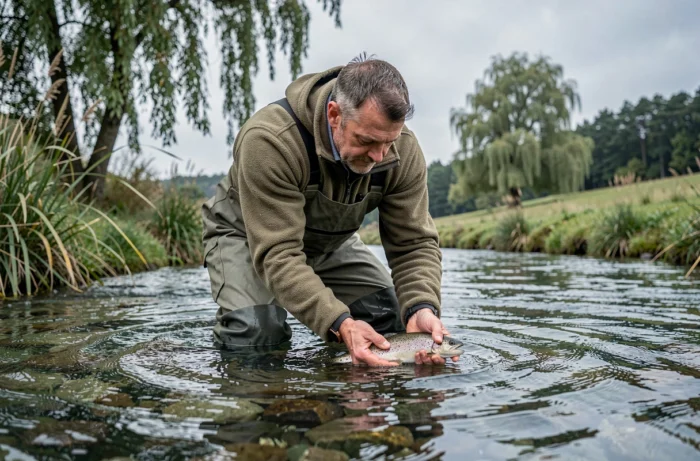
The Lorraine you discover when you leave the usual guidebooks behind is a region where every village, workshop and meadow reflects a tangible connection between local people and their surroundings. Salt in Dieuze, crystal in the Meurthe Valley, the Marsh Fritillary in the wet meadows, madeleines in Commercy: these are local stories, rooted in a specific geography, that give a journey its character and its memories.