Which décor elements have the greatest impact on a wedding’s overall atmosphere, and where can you make compromises without losing visual cohesion? Flowers, lighting, textiles and table accessories don’t all deliver the same effect for every euro spent. This article compares the practical ways to decorate a wedding, helping you create a personalized atmosphere without spreading your budget too thin.
Comparing the key elements of wedding décor
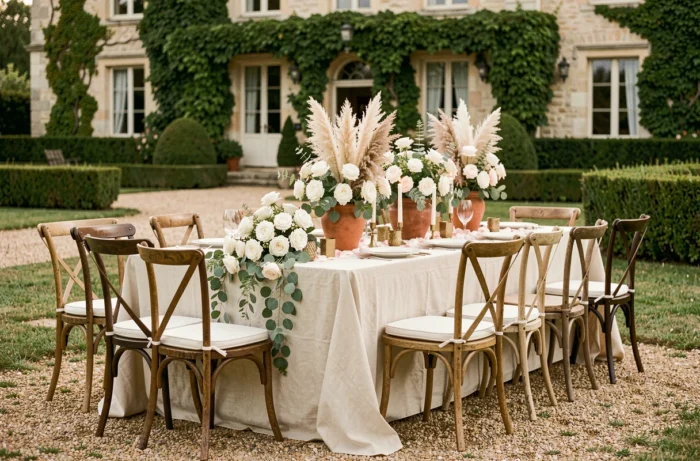
Not all decorative elements play the same role in how guests perceive a reception venue. Some shape the overall atmosphere (lighting, textiles), while others are seen up close by guests (centerpieces, tableware). The table below summarizes the relative impact of each element.
| Decorative element | Area of impact | Effect on the atmosphere | Budget flexibility |
|---|---|---|---|
| Lighting (string lights, candles, spotlights) | Entire venue | Very high | High (candles are inexpensive; spotlight rental costs vary) |
| Flowers and floral arrangements | Tables, ceremony, entrance | High | Moderate (depends on varieties and season) |
| Textiles (tablecloths, table runners, drapes) | Tables, ceiling, walls | High | High (wide range of prices) |
| Tableware and glassware | Tables only | Medium | Moderate (rental or purchase) |
| Accessories (place cards, photo booth, signage) | Focal points | Moderate | Very high (DIY is an option) |
Lighting comes out on top because it can transform the feel of an entire venue in just a few minutes. A plain room under harsh white fluorescent lights feels completely different from a space bathed in the warm glow of string lights and candles. Flowers, meanwhile, have the greatest impact in areas close to guests. They stand out in table photos but have less influence on the overall atmosphere.
For couples looking for wedding décor ideas on Univers Mariage, this kind of prioritization helps focus the budget where the impact will be most noticeable.
Wedding flowers: seasonality and reuse change the equation
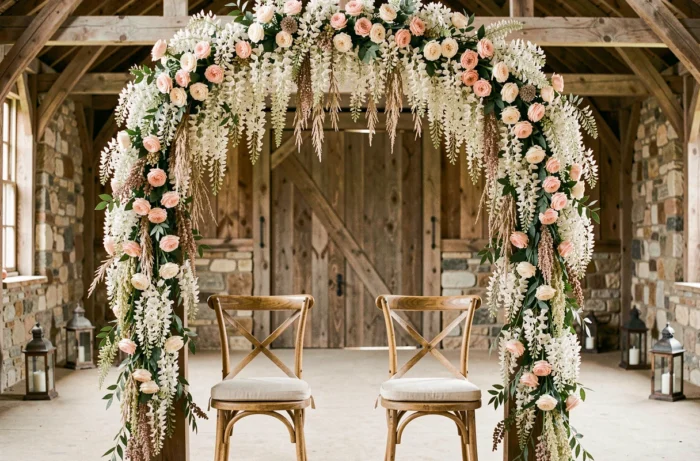
Floral décor is where prices vary the most for a comparable visual effect. Choosing seasonal, locally grown flowers can lower costs without sacrificing volume. A peony in June costs considerably less than an imported peony in December, while creating the same effect in an arrangement.
Beyond the price, it’s worth considering reuse early on. Moving floral arrangements from the ceremony to the reception venue is common practice. It requires coordinating their removal, transport and setup with the florist.
Delicate flowers can suffer if left without water for too long, especially in hot weather. So transferring arrangements isn’t an automatic way to save money: it needs to be assessed based on the venue, schedule and varieties chosen. Dried flowers and potted plants are more durable alternatives, with the added benefit that they can be kept or given away after the celebration.
Flowers and plants to consider for an eco-friendly wedding
- Dried flowers (pampas grass, lavender, thistle): no freshness concerns and can be reused as home décor after the wedding
- Potted plants (succulents, herbs, small olive trees): work as centerpieces and gifts for guests
- Seasonal local flowers (dahlias in summer, anemones in spring): lower transportation footprint and longer-lasting arrangements
Reception venue lighting: the most overlooked way to transform a space
Lighting sets the mood of a venue before guests even look at the tables. Warm-white LED string lights, pillar candles arranged in clusters and spotlights aimed at floral arrangements create layers of light that add depth to any space.
Candles are still the most affordable way to create a cozy atmosphere. Grouped in threes or fives on a mirror or tray, they create a sense of abundance that individual candles can’t achieve.
Fire safety requirements to check
In a venue open to the public, drapes, curtains and suspended decorations may need to meet fire safety requirements. The venue may also impose additional restrictions on the materials you can use. Before placing an order, ask the venue manager to approve your décor plans and the materials’ compliance documents.
Overlooking this can lead to your decorations being refused on the day, forcing you to improvise a backup plan at the last minute. Checking in advance also prevents you from ordering yards of sheer fabric or tulle that you ultimately won’t be allowed to hang.
Color palette and wedding theme cohesion
A visually successful wedding depends less on the number of decorative elements than on how well the color palette works together. Limiting your choices to two or three main colors makes every purchasing decision easier and ensures that the different elements (flowers, textiles, tableware, stationery) form a cohesive whole.
Pastel palettes (dusty pink, sage, ivory) are popular for romantic weddings, while terracotta and olive green or midnight blue and gold create a bolder look. Your theme can guide your palette, but it also works the other way around: start with a strong color and build the theme around it.
Table textiles and accessories
Table runners, napkins and any chair covers visually tie all the different elements together. Quality textiles can elevate simple tableware, while beautiful tableware loses its impact on a wrinkled tablecloth.
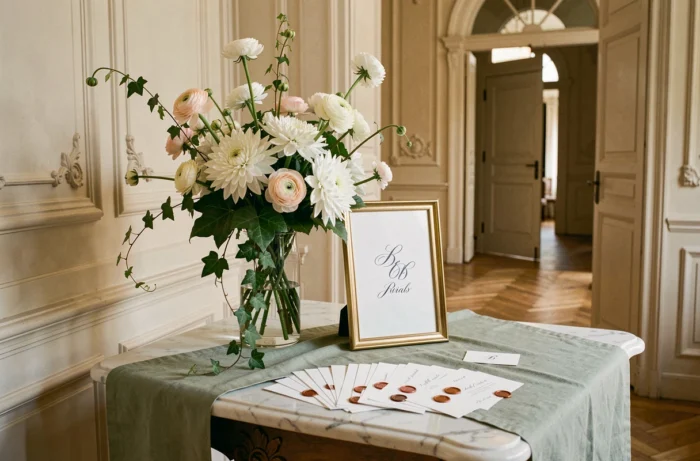
Place cards, menus and table numbers are small details, but they contribute to the guests’ experience at the table. Vintage styles (kraft paper, calligraphy, stamps) remain popular, as do clear acrylic stands for more minimalist weddings.
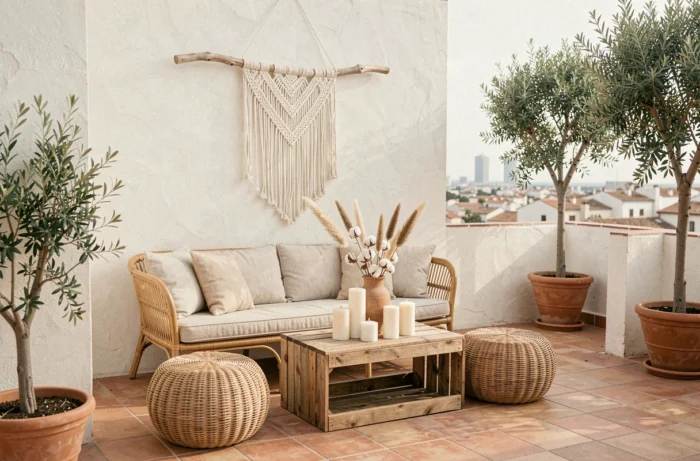
Wedding décor feels more cohesive when budget decisions reflect the real impact of each element. Lighting transforms a venue, flowers enhance focal points, and textiles create visual continuity. Checking venue restrictions in advance and sticking to a limited color palette are the most reliable ways to create an unforgettable atmosphere without unnecessary spending.