
Searches related to housing projects (construction, renovation, home adaptation) generate a wealth of online information, where commercial content, anonymous personal accounts and institutional resources all coexist. Sorting through these sources to find reliable advice for a housing project is a task in itself, especially when financial and regulatory requirements change from year to year.
Free, independent housing advice: the little-known role of France Rénov’
Before contacting a contractor or builder, one often-overlooked step is to consult a public advisory service. Several local authorities describe France Rénov’ as a source of free, impartial and independent advice on the technical and financial aspects of a renovation or home adaptation project.
This service covers more than insulation and heating. Some France Rénov’ Advice Centres, such as ALEC Paris Ouest La Défense, featured by the Town of Garches, offer to review quotes received by homeowners and help them assess technical options before signing. This is a practical resource when you’re choosing between two proposals or unsure whether a price is reasonable.
France Rénov’ also covers home adaptation (accessibility, remaining at home) and can guide people through the MaPrimeAdapt’ process. This broader scope makes it a useful starting point for projects that go beyond energy renovation alone. For structured resources on construction and renovation, the www.Conseil Habitat website also brings together topic-based content covering different stages of a project.
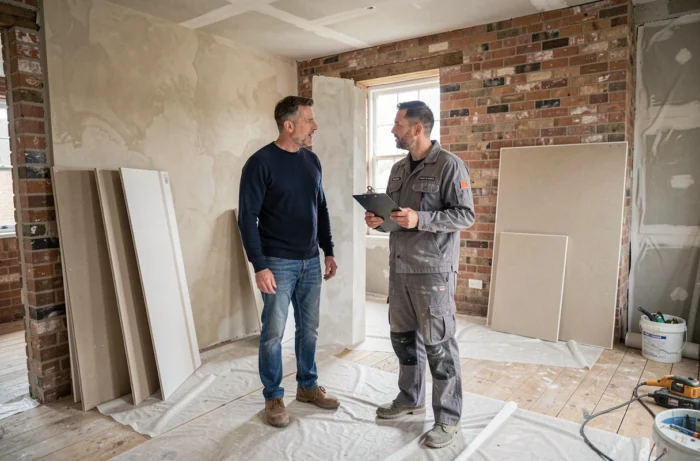
Assessing the reliability of online sources: distinguishing technical advice from sales pitches
The main challenge for homeowners is not a lack of information, but the sheer volume of it. Forums, contractors’ blogs, manufacturers’ websites and comparison sites all have their uses, but each also has an inherent bias.
A building materials manufacturer may publish reliable technical guides about its own products, but rarely about those of its competitors. A community forum can provide unfiltered accounts of building work, but they may be outdated or unsuitable for a different location. Cross-checking sources remains the only reliable way to verify technical information.
How to assess a source of housing advice
- The author or organisation is identifiable and states its expertise (certification, qualifications or membership in a recognised professional network).
- The advice clearly distinguishes between current regulatory requirements and aesthetic or comfort-related choices.
- Recommendations are dated: an article about renovation grants published before September 2024 may contain outdated information, particularly about MaPrimeRénov’.
- Access to advice is not conditional on immediately getting in touch for commercial purposes.
Associations specialising in eco-construction or co-housing are another option. They often publish project testimonials and technical insights from their networks, providing access to practical information not found on institutional websites.
Regulatory guidance for major renovations: what generic guides leave out
Online housing advice articles readily cover budgets, material choices and how to select a professional. They less often address the regulatory requirements attached to grant-supported schemes, even though these determine eligibility for funding.
For a major renovation receiving public grants, using Mon Accompagnateur Rénov’ is a regulatory requirement, not an option. This scheme, outlined in CAPEB’s overview of available grants, governs a process designed to achieve an improvement of at least two DPE rating classes. The advisor is involved both before work begins (energy audit, work plan) and afterwards (compliance checks).
This requirement changes how homeowners should seek advice. Anyone considering a whole-home renovation cannot simply gather opinions online and then start work. The regulatory process requires a specific sequence: audit, support from a certified advisor, project approval, then completion of the work.
Limitations of the information available on grants
Grant rates and eligibility requirements (MaPrimeRénov’, energy savings certificates, local grants) change regularly. An article published six months ago may refer to caps or reimbursement rates that are no longer in effect. Institutional websites (ANAH, local authorities) remain the most reliable sources on this subject, provided you check when the information was last updated.
Online information about home adaptation projects remains fragmented. MaPrimeAdapt’ amounts and eligibility requirements are less thoroughly documented than those of MaPrimeRénov’, making it all the more useful to consult a France Rénov’ Advice Centre.

Renovation budgets and quotes: check before you sign
Budget is the focus of most homeowners’ searches. Online price ranges (per square metre or by type of work) provide a rough guide, but vary depending on location, project complexity and time of year.
Having an independent third party review a quote, as some France Rénov’ Advice Centres offer to do, can help identify unusually high costs or missing services. This service is free and avoids relying solely on online comparisons, whose methodology is rarely transparent.
- Request at least three detailed quotes for each part of the project, and check that the services listed are comparable.
- Check the professional’s qualifications (RGE certification for energy renovation work and a valid ten-year liability insurance policy).
- Consult a France Rénov’ advisor before signing if the project falls within the scope of public grants.
The quality of housing advice can be measured by how well it bridges the gap between what a homeowner expects and what the project actually involves. The most useful sources describe practical requirements (thermal regulations, mandatory advisory support, contractor qualifications) rather than general principles that could apply to any project.