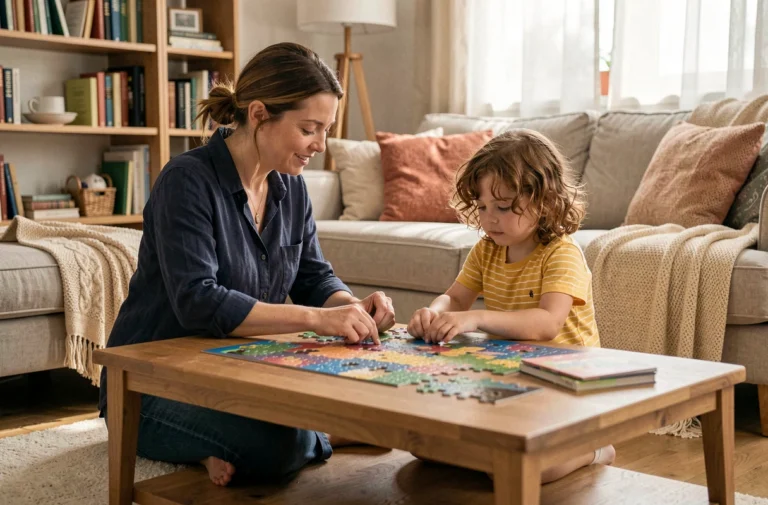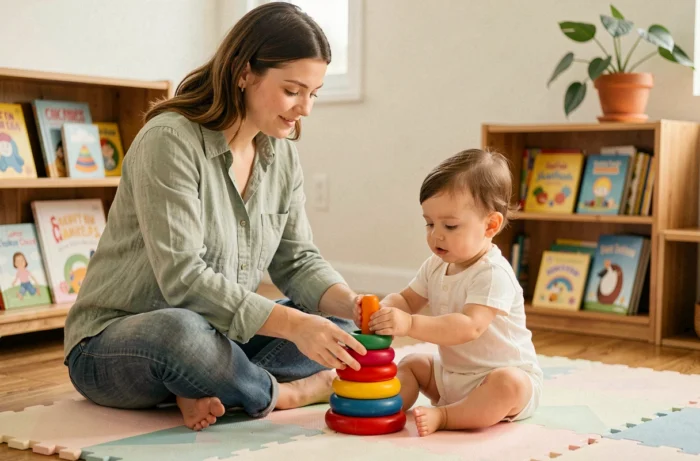
A MAM (Maison d’Assistantes Maternelles, or childminders’ group setting) is a shared space where several registered childminders each care for the children entrusted to them. Unlike a group daycare center, each parent remains the direct employer of their child’s childminder. This distinctive arrangement makes it possible to offer small-group activities while still providing individualized care tailored to each toddler’s pace.
The MAM’s legal status and its impact on the activities offered
MAMs are often confused with micro-crèches. In a MAM, childminders work in a shared space, but each retains her own registration. This means that the number of children she can care for is capped by her individual registration, not by the total capacity of the premises.
This framework has a direct impact on how play activities are organized. When a childminder offers a painting workshop or a movement session, she remains responsible for the children covered by her contract. Delegating care to a colleague allows for temporary cover, but does not change the number of children permitted under each registration or the contracted hours.
The premises themselves must comply with the standards applicable to establishments open to the public. Play areas require specific safety checks, which determine what types of activities can take place. A free-movement session, for example, requires enough space and suitable flooring. To learn about MAMs on Maman m’adore, you can find details about their day-to-day operations and educational principles.
Sensory activities in a MAM: how small groups make a difference
The main benefit of a MAM for early development lies in its small group size. With only a few children per childminder, each toddler has more time to explore, without having to wait in line or take turns according to a set schedule.
Tactile exploration and hands-on play
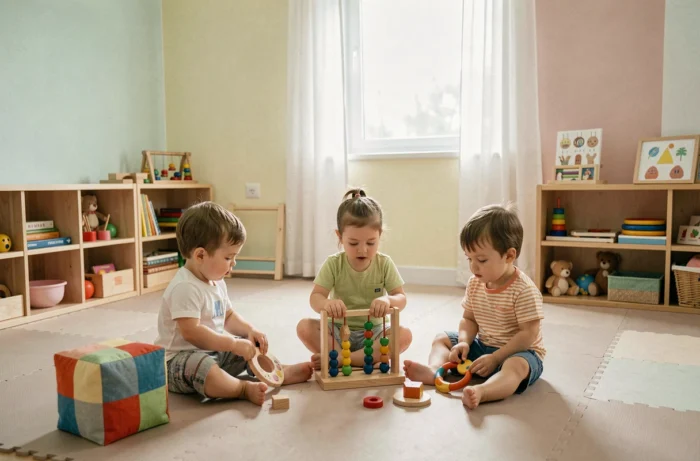
Sensory activities are the foundation of early development in a MAM. Play dough, sensory bins filled with semolina, rice or water, finger painting: these activities engage the senses of touch and sight, and sometimes smell. Children can explore at their own pace, without pressure to achieve a particular result.
The childminder does not dictate how the activity should be done. She sets out the materials, observes and offers support if the child asks for it. This hands-off yet attentive approach is easier to maintain when the group is small.
Musical play and movement
Nursery rhymes, small percussion instruments and circle games: musical expression supports language development and motor coordination. In a MAM, these sessions often take place in a circle, in a dedicated space where babies can crawl, stand up and clap without disturbing anyone nearby.
Some MAMs also use baby sign language, which allows toddlers to communicate before they learn to speak. A few simple signs (more, eat, sleep) can reduce frustration and enrich everyday interactions.
Free play and independence: the educational cornerstone of a MAM
Free play is not downtime between structured activities. In a MAM, it takes up a significant part of the day and is a deliberate educational choice.
In practice, children choose what to do from the toys and play areas available. They decide who to play with and for how long, and can move on to something else whenever they like. Free play helps children learn to make decisions and manage frustration when another child is using the toy they want.
The layout of the space has a direct impact on the quality of free play. MAMs generally organize their premises into separate areas:
- A movement area with climbing equipment, tunnels or age-appropriate mats to encourage mobility and balance
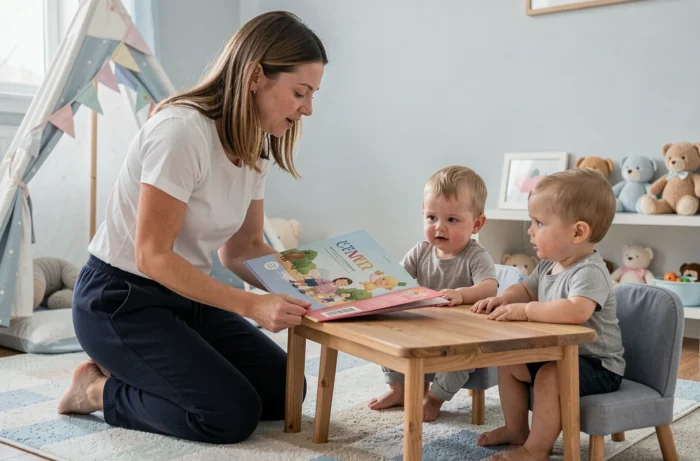
- A quiet corner with books, cushions and stuffed animals, where children can retreat when the group becomes tiring
- A pretend-play area (play kitchen, dolls, dress-up clothes) that encourages symbolic play from around the age of two
- An area for building toys and puzzles, which develop fine motor skills and concentration
This thoughtful layout allows children to move around freely while still having familiar, consistent reference points. The childminder observes and steps in for safety or to help resolve a conflict, but does not direct the play.
Outdoor outings and nature discovery in a MAM
Outdoor outings are part of everyday life in many MAMs. A private garden, a local park or a walk around the neighborhood: regular time outdoors stimulates gross motor skills and sensory exploration in ways that indoor spaces cannot replicate.
Walking barefoot on grass, picking up leaves, watching an insect: these simple experiences fully engage a toddler’s attention. A small group makes supervision easier and allows each child to move at their own pace, without being rushed by a rigid group schedule.
Some MAMs grow a small vegetable garden with the children. Planting seeds, watering them and watching a radish grow introduces the ideas of time and patience to children who live almost entirely in the present moment.
Meals and everyday routines: valuable opportunities for learning
Mealtimes in a MAM are more than just a break for nourishment. For a baby starting to eat solid foods, touching a piece of broccoli, smelling pear purée or squashing a banana between their fingers is a complete sensory activity.
Childminders adapt mealtimes to each child’s pace. A six-month-old does not eat at the same time or in the same way as a two-year-old. The flexibility made possible by a small group respects each child’s individual development without forcing them to learn before they are ready.
Diaper changes, getting dressed and nap time follow the same principle. These repeated routines structure a toddler’s day and provide reassuring points of reference. In a MAM, they also become opportunities for conversation: naming body parts during a diaper change, describing clothes while getting dressed, or singing a lullaby before a nap.
A MAM therefore combines organized activities, free play and everyday routines in a welcoming, small-scale setting. This smaller scale remains its greatest asset in supporting toddlers’ development, provided the premises, registrations and organization comply with the regulations applicable to each childminder.